yunha[at]mit[dot]edu

About me
I am an Assistant Professor at MIT with a shared appointment between Biology, EECS and the Schwarzman College of Computing. I also serve as the co-founder and Chief Scientist at Tatta Bio, a scientific nonprofit dedicated to advancing genomic AI for biological discovery. I completed my Ph.D. in Biology from Harvard University and B.S. in Computer Science from Stanford University. My research interests span machine learning for sustainable biomanufacturing, microbial evolution, and open science.
I am looking forPhD students and postdocs to join my lab, please email me if you are interested.
Research Interests
Microbial genomes encode the largest molecular, biochemical and functional diversity on Earth. My group’s research focuses on developing machine learning models and experimental approaches to discover and design novel biological functions. We integrate computation with expertise in evolution, ecology and biochemistry to characterize and harness the functional potential of microbes.
Machine learning approaches to discover and design microbial biochemistry. Microbes are the world’s best chemists. We develop machine learning approaches and datasets to systematically explore microbial chemical diversity.
Modeling and interpreting mechanisms of microbial evolution, ecology and function. AI is transforming how we conduct scientific inquiry. We build and interpret biological sequence models to discover mechanisms that underpin biological processes across scales.
Microbial applications for human and environmental health. From natural products, biomanufacturing to microbial therapies, we focus on research that addresses critical challenges.
Publications
For the most up to date list, please see my Google Scholar.
Nathan Lanclos#, Kyrellos Ibrahim#, Andre Cornman#*, Marco Huang, Vikram Gill, Aalini Jiang, Jonathan Abraham, Jennifer Gin, Yan Chen, Christopher Petzold, Justin Baerwald, Tanja Kortemme, Jay Keasling*, Yunha Hwang*, Generative Design of New-to-nature Biosynthetic Assembly Lines with Genomic Language Modeling
bioRxiv 2026.09.11.750945; doi: https://doi.org/10.64898/2026.09.11.750945
#co-first authors, *co-correspondence
Nicolo Zulaybar, Matt Tranzillo, Rachel Silverstein, Yunha Hwang*, Andre Cornman*
Discovery of microbial intergenic features with genomic language modeling and multimodal search
bioRxiv 2026.09.15.751765; doi: https://doi.org/10.64898/2026.09.15.751765
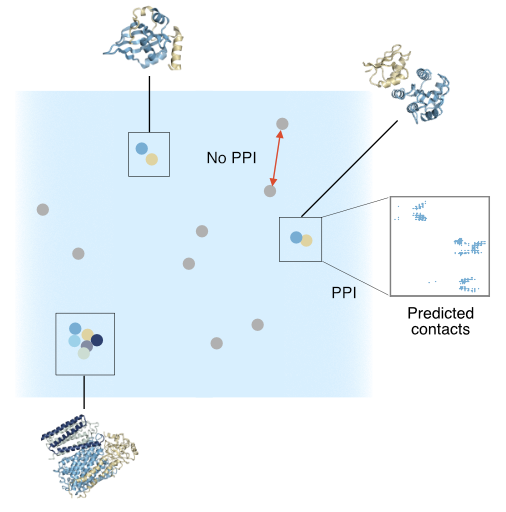
Andre Cornman, Matt Tranzillo, Nicolo G. Zulaybar, Imane Bouzit, Yunha Hwang, “Linear-time prediction of proteome-scale microbial protein interactions”, Proc. Natl. Acad. Sci. U.S.A. 123 (25) e2610619123, https://doi.org/10.1073/pnas.2610619123 (2026)

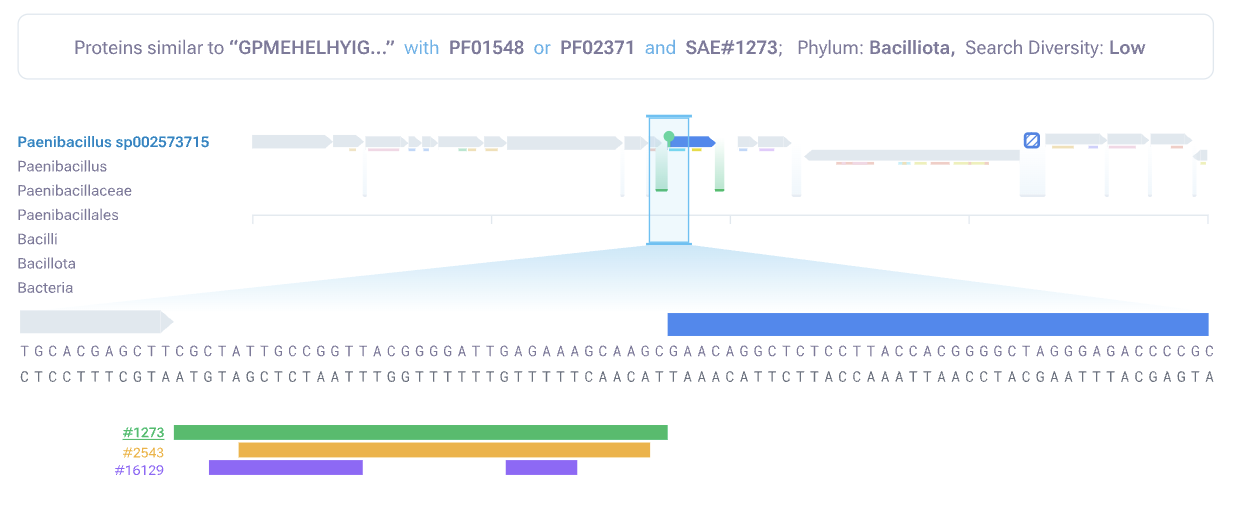
Nishant Jha, Joshua Kravitz, Jacob West-Roberts, Antonio Camargo, Simon Roux, Yunha Hwang, “Gaia: A Context-Aware Sequence Search and Discovery Tool for Microbial Proteins”, Science Advances, https://doi.org/10.1126/sciadv.adv5109 (2024)

Andre Cornman, Jacob West-Roberts, Antonio P Camargo, Simon Roux, Martin Beracochea, Milot Mirdita, Sergey Ovchinnikov, Yunha Hwang , “The OMG dataset: An Open MetaGenomic corpus for mixed-modality genomic language modeling”, ICLR (2025)

Yunha Hwang, Andre Cornman, Elizabeth Kellogg, Sergey Ovchinnikov, Peter Girguis “Genomic language model predicts protein co-regulation and function” Nature Communications, (2024)

Yunha Hwang, Simon Roux, Clement Coclet, Sebastian Krause, Peter Girguis “Viruses interact with hosts that span distantly related microbial domains in dense hydrothermal mats.” Nature Microbiology, (2023)
-
![Soil sampling]()
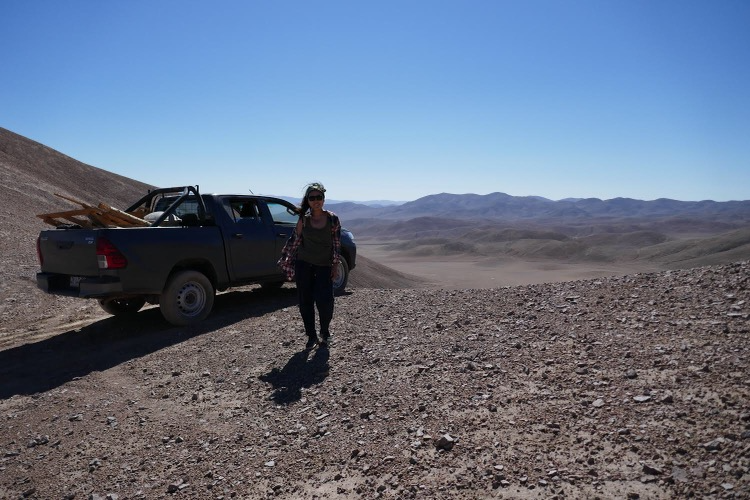
Atacama fieldwork, Chile (2019)
-
![R/V Revelle Van]()
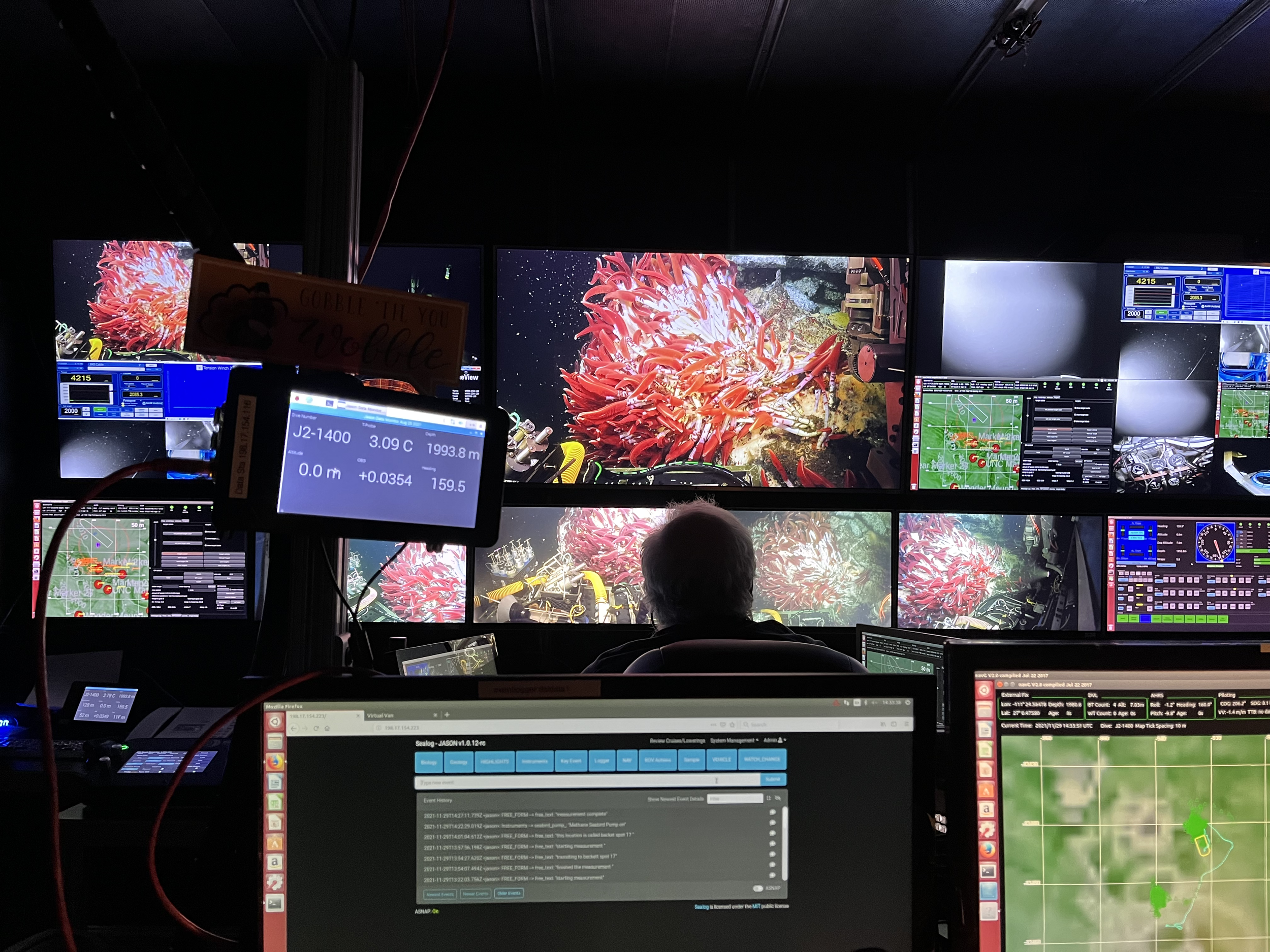
Sampling in the Guaymas Basin, Mexico (2021)
-
![occasional wet labwork!]()
Girguis lab (2022)
-
![Cruise fieldwork]()
with AUV Sentry aboard R/V Revelle (2021)
-
![arctic glaciers]()
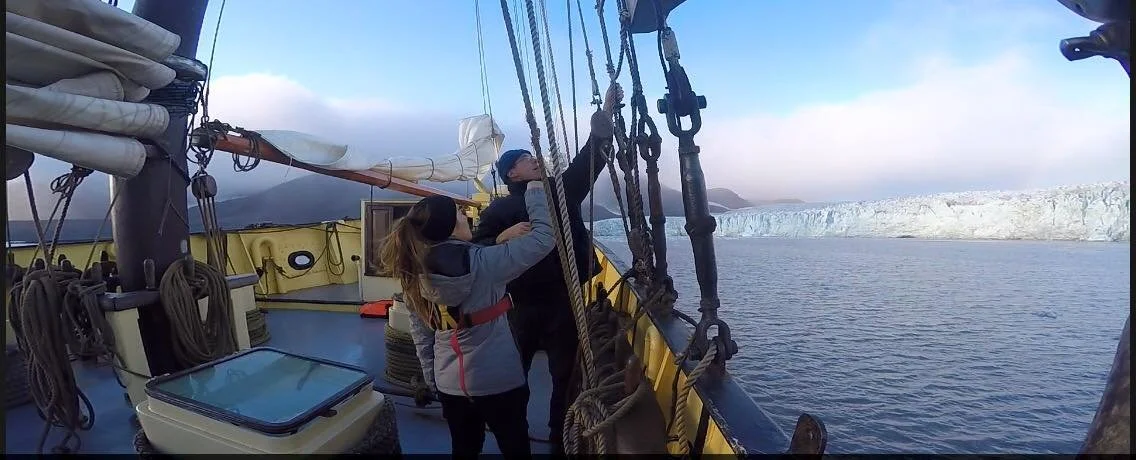
Arctic fieldwork, Svalbard (2016)
-
![Soil sampling]()
Atacama fieldwork, Chile (2019)
-
![halophiles]()
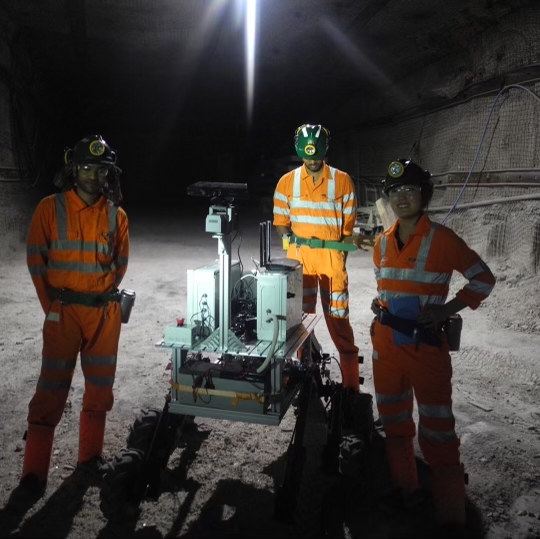
Boulby Underground Laboratory, UK (2019)
-
![ISME18, Lausanne, Switzerland (2022)]()
ISME18, Lausanne, Switzerland (2022)